- Regular Price
- $19.99
- Sale Price
- $19.99
- Regular Price
- $19.99
Sold Out
- Unit Price
- per
A browband that looks slightly off usually is. If it pinches behind the ears, pulls the headpiece forward or sits too low across the forehead, your horse will feel it long before you do. Knowing how to fit a horse browband properly is not just about turnout - it affects comfort, bridle stability and the overall balance of the fit.
For experienced riders, this is one of those details that can be easy to overlook because the browband is a smaller part of the bridle. Yet a poor fit can undo the look and function of otherwise well-chosen tack. A good browband should sit neatly, allow the headpiece to lie where it should and frame the horse’s head without tension.
The browband helps keep the bridle correctly positioned. It works with the headpiece and cheekpieces to hold everything in place, particularly around the poll and behind the ears. If the browband is too short, it can drag the crownpiece forward into the base of the ears, creating pressure and an untidy line. Some horses show this quickly by becoming fussy in the contact, resistant when bridling or sensitive around the ears.
If it is too long, the issue is usually less severe from a comfort point of view, but the bridle can lose that secure, refined look. An overly loose browband may gap away from the forehead, sit unevenly or allow the rest of the bridle to move more than it should. In practical terms, the right fit gives you comfort, cleaner lines and a more polished turnout.
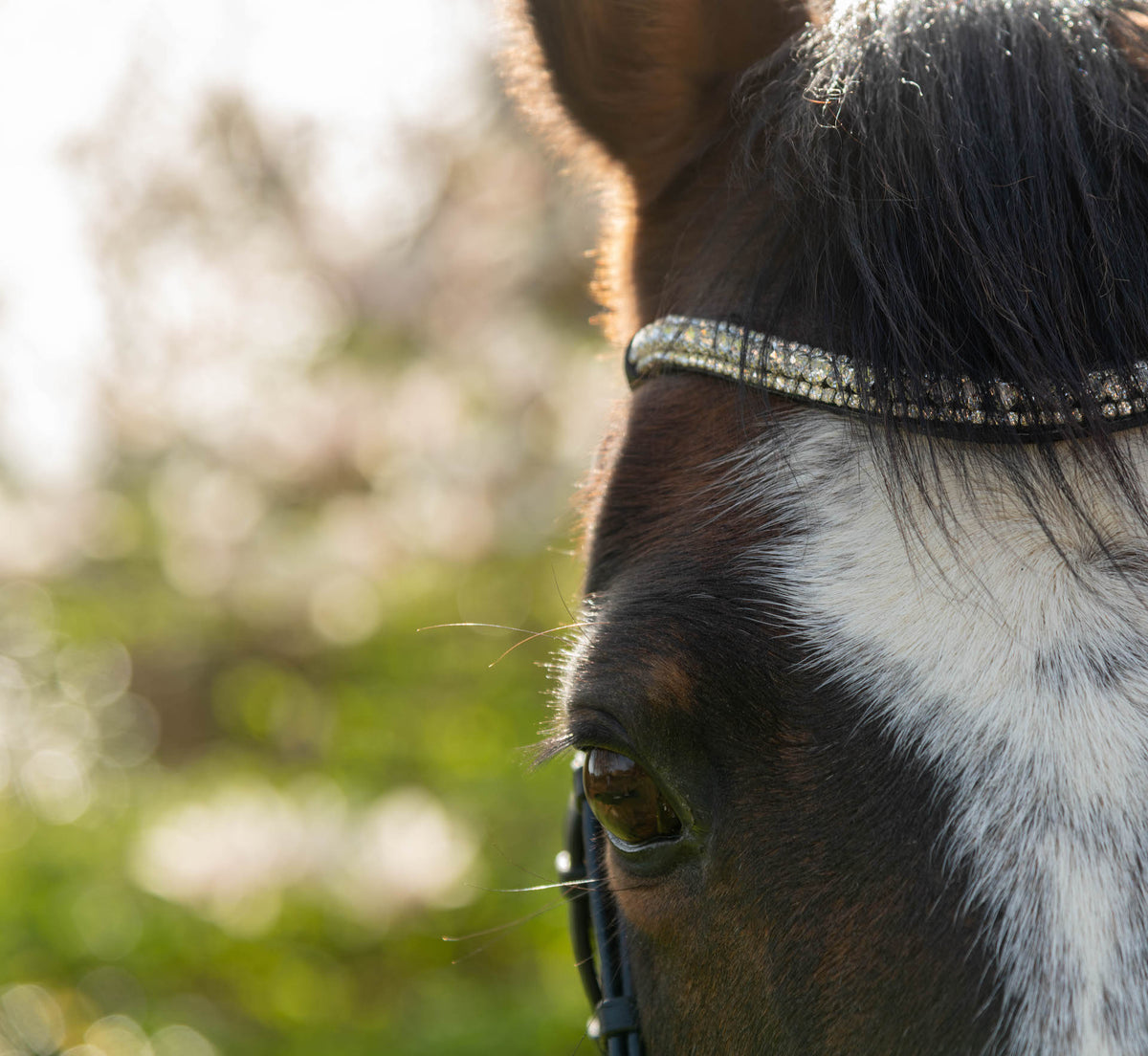
The simplest way to judge fit is with the bridle on the horse’s head, fully assembled and adjusted as it would be for riding. A browband should sit smoothly across the forehead, just below the base of the ears, without pulling the headpiece forward. You want enough room that the horse looks comfortable, but not so much that the browband appears loose or drops down the face.
As a general visual guide, the browband should create a gentle curve across the forehead rather than a straight, tight line. That slight softness matters. A browband under tension often makes the whole bridle look as though it is being pulled upwards at the cheekpieces and inwards at the poll.
There should also be clear space around the ears. The loops of the browband need to sit neatly on either side where they attach to the headpiece, without bunching, twisting or pressing into the ear base. If the horse’s ears look crowded by the leather, it is usually too small or the shape is not right for that head.
If you are buying a replacement rather than fitting one already in your tack room, measuring the existing browband can help - but only if the current one fits well. Lay it flat and measure from one end loop to the other along the front curve. Then compare that with the sizing provided by the manufacturer.
That said, standard sizes are not always standard. One full size in one brand may fit more like cob in another, especially with shaped, waved or padded styles. Horses with a broader forehead, a prominent poll area or larger ear set often need a different length from what their bridle size alone suggests.
For that reason, it is often better to fit to the horse’s head rather than rely purely on the size stamped on the bridle. A cob-sized horse does not always wear a cob browband, and many warmbloods, natives and crosses sit between expected sizes.
A too-small browband is the most common fitting problem. You will usually see the headpiece being pulled forward so that it sits too close to the ears. In some cases, it can press the headpiece into the cartilage at the base of the ear, which many horses dislike.
The browband itself may look taut across the forehead, with no soft curve at all. The cheekpieces can be drawn slightly upwards, making the whole bridle appear tight through the front. On some horses, the throatlash and noseband also seem to sit oddly because the top of the bridle is being dragged out of place.
Behaviour can offer clues as well. A horse that is difficult about being bridled, tosses the head when the bridle is put on or becomes ear-shy may be reacting to pressure in this area. Of course, that does not automatically mean the browband is the only cause, but it is one of the first things worth checking.
A browband that is too large usually causes fewer pressure issues, but it can still affect the overall fit and finish. It may sag away from the forehead, shift side to side or sit lower than it should. On some bridles, a long browband can also make the headpiece look less stable, particularly during work.
Visually, the result can be less elegant than a correctly fitted browband. If you care about presentation - whether for dressage, showing or everyday riding - that matters. The best fit should look clean and intentional, not approximate.
Fit is not only about length. The shape of the browband changes how it sits on the horse’s head. A straight browband offers a classic look and works well on many heads, particularly when the proportions of the horse and bridle are already quite balanced.
A curved or waved browband can be a better option for horses who need a little more room through the front. Because of the shape, it often gives a softer line and can sit more comfortably without looking oversized. This is especially useful on horses with broader foreheads or where a straight browband appears to pull.
Padded styles can also alter the fit slightly. Extra bulk may make a snug browband feel even tighter once on the horse, so it is sensible to allow for that when choosing between designs. Style matters, but comfort comes first.
Not every horse suits the same cut. Fine-headed Thoroughbred types may need a more delicate browband shape and slightly less bulk, while wider-headed cobs and warmbloods often benefit from extra length or a more curved design. Horses with a lot of forelock or a broad ear set can also need more room than expected.
This is where there is a genuine it depends element. If your horse is between sizes in bridles generally, the browband is often the part worth adjusting first. A neatly fitted browband can improve the overall look of the bridle even when the rest is fairly standard.
Once the browband is on, take a proper look from the front and both sides rather than judging quickly in the stable mirror. The headpiece should sit clear behind the ears without being dragged forward. The browband should rest evenly across the forehead and the loops should lie flat.
Run your fingers gently around the ear base and along the top of the browband. You are checking for tightness, rubbing points or leather pressing into the horse. If the fit looks correct but the horse still seems irritated, check the headpiece shape and overall bridle fit too, because these areas all work together.
It is also worth reassessing after the first few rides, especially with new leather. Some materials soften and settle slightly, while crystal or embellished browbands can sit a touch differently once fully broken in.
A browband is one of the easiest ways to refine a bridle, but the smartest choice always balances style with function. If you prefer a more decorative look, make sure the shape still suits your horse’s head and the width complements the rest of the bridle. A very fine browband on a substantial cavesson can look out of proportion, while an overly bold style may overwhelm a lighter bridle.
For riders building a polished, coordinated turnout, consistency matters. The browband should work with the bridle leather, noseband style and the overall presentation of the horse. Premium tack should not only look right in the lorry park or warm-up - it should perform properly once you are in the saddle. That is where good fit earns its place.
FETLOX customers tend to shop with a clear idea of the finish they want, and that is exactly the right approach with browbands. Choose the style you like, then be precise about the size and shape that will let it sit correctly.
A well-fitted browband should disappear into the overall picture. You notice the horse, the bridle looks right, and nothing is distracting, pinching or pulling. That is the standard to aim for every time you tack up.
0 comments