- Precio normal
- €19,99
- Precio de venta
- €19,99
- Precio normal
- €19,99
Agotado
- Precio unitario
- por
A well-turned-out horse is not simply about matching colours. The right horse tack supports clear communication, protects comfort in work and gives your everyday kit a considered, professional finish. From the bridle picked up for a schooling session to the girth used for competition, each piece should earn its place through fit, function and reliable quality.
For riders who already know their way around a tack room, the challenge is rarely identifying what a saddle pad or head collar does. It is choosing the version that suits a particular horse, discipline and routine - while building a collection that looks as good as it performs.
Co-ordinated tack has real appeal, particularly when a dressage pad, ear bonnet and rider layers create a polished look. But the best starting point is always the horse’s shape, sensitivity and way of going. A beautiful bridle is of little value if the browband pulls the cheekpieces forward, and an impressive saddle pad cannot compensate for a saddle that is not correctly fitted.
Consider where your horse tends to show pressure or irritation. A horse with a sensitive poll may benefit from thoughtful headpiece shaping and generous padding, while one that rubs behind the elbow needs careful girth selection and a clean, stable fit. Horses that work hard, sweat heavily or are clipped may need different materials and washing routines from those used for occasional hacking.
It also depends on the job. Everyday schooling tack should be durable and easy to maintain, whereas competition pieces may prioritise a more refined profile, premium leather or carefully placed detailing. Both can be stylish. The difference lies in selecting equipment that makes sense for the work ahead.
Your core kit is the equipment used most often: bridle, reins, saddle pad, girth and head collar with lead rope. These are the items where good construction and consistent fit make the biggest difference over time.
A bridle should sit quietly and evenly, without excessive bulk around the face or pressure across the ears. Check that the cheekpieces lie flat, the noseband allows comfortable jaw movement and the throatlash is adjusted with room for the horse to flex. The browband should be long enough to prevent the headpiece being drawn into the base of the ears.
Leather remains a premium choice for its appearance, feel and ability to improve with proper care. It does require regular cleaning and conditioning. Synthetic alternatives can be practical for wet weather, hunting yards or busy routines where easy cleaning is the priority. Neither is automatically better - the right choice reflects how you ride and how much care the piece will receive.
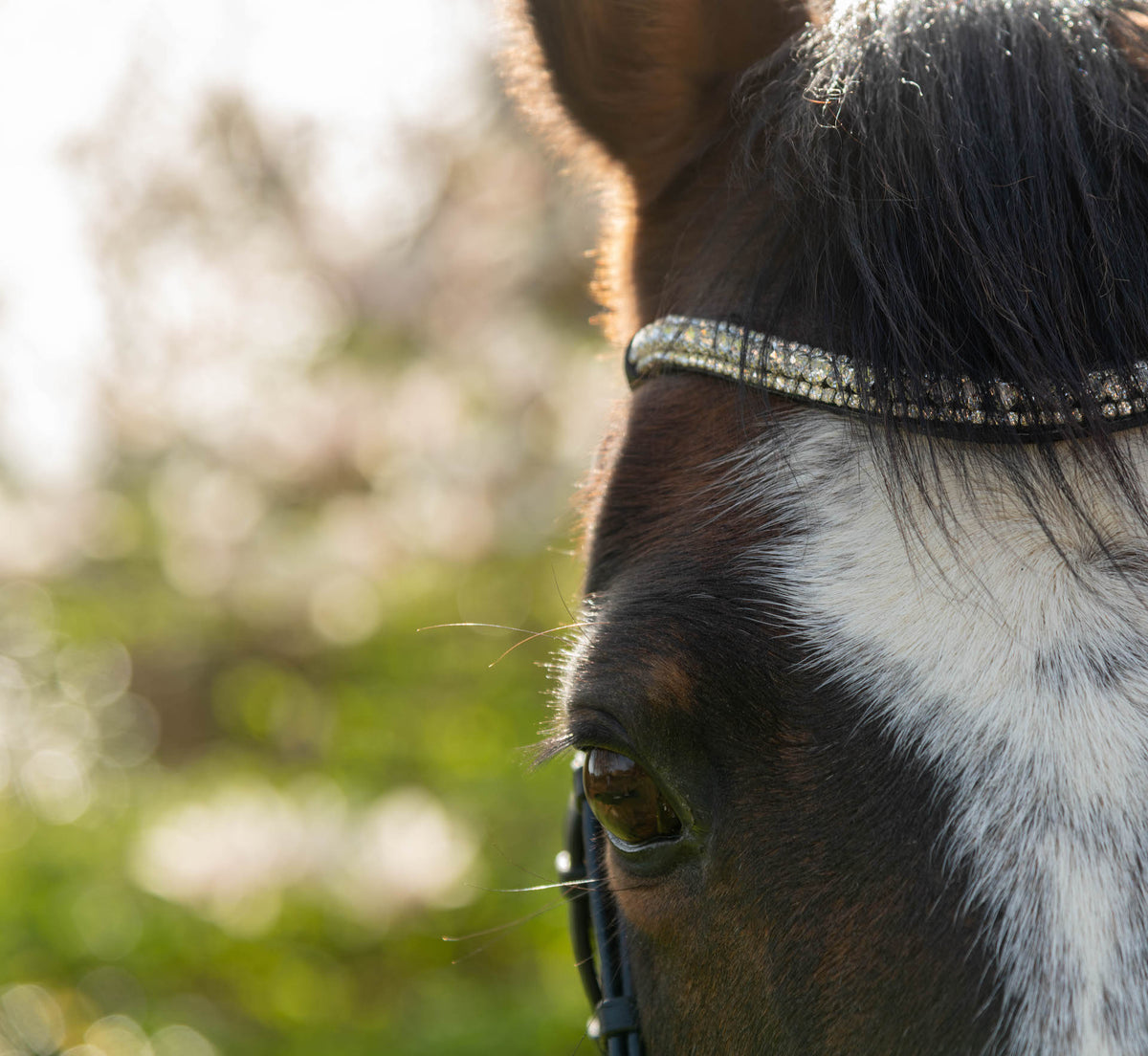
A browband is one of the easiest ways to refresh a bridle’s look, whether you prefer subtle sparkle, plaited leather or a clean, classic line. Keep the proportions balanced. A statement browband can elevate a smart competition turnout, but it should never compromise fit for the sake of detail.
A saddle pad should provide a neat layer between horse and saddle without creating pressure at the wither or bunching under the panels. Look for a shape suited to your saddle and enough clearance through the spine. After mounting, run a hand beneath the front of the pad to make sure it is lifted into the gullet rather than pulled down onto the withers.
Fabric choice matters. Breathable, moisture-managing materials can be especially useful for regular schooling, while quilted pads offer a structured finish for dressage and flatwork. A pad needs washing often enough to remove sweat and grease, as a pristine outer surface does not always mean a clean underside.
Ear bonnets can complete a coordinated set, but they also serve a practical purpose. They may help reduce distraction from flies or arena noise for some horses. Choose ears that sit smoothly and a throat section that does not pull back under the bridle. If a horse dislikes wearing one, do not force the issue simply to complete a look.
A girth deserves close attention because it sits in an area prone to rubbing, sweat and movement. It should be appropriate for the saddle’s billet arrangement and tightened evenly on both sides. Materials range from traditional leather to neoprene, fabric and anatomically shaped designs, each with different care requirements and levels of grip.
Clean the girth after sweaty sessions, especially around buckles and elastic. Girth grime is an avoidable source of irritation. Check elastic regularly too: once it loses resilience, it can create uneven tension rather than useful flexibility.
A quality head collar and lead rope are everyday essentials that often see the hardest use. Select a head collar with adjustable points where needed, secure fittings and a shape that does not sit too close to the eyes. For the lead rope, look for a comfortable hand feel and a practical length for your handling routine. Keep worn clips, frayed ropes and damaged stitching out of service.
Premium horse equipment should be enjoyable to use, but it must also suit stable reality. Leather has enduring appeal and looks particularly smart when cleaned, conditioned and stored properly. It can be a long-term investment, provided it is not left wet, caked in mud or exposed to extreme heat.
Technical fabrics are often the sensible choice for pads, boots and ear bonnets. They can offer breathability, quick drying and straightforward washing, which makes a difference when you ride frequently. Pay attention to trims, hook-and-loop fastenings and stitching. These small details often determine whether a product continues to look sharp after a full season of use.
Colour is personal, though it is worth being realistic. Pale pads and white sheepskin can look exceptional in the arena but demand more frequent laundering. Navy, black, grey and deep jewel tones are easier to maintain while still offering a polished finish. Build around a small palette so that pads, bonnets, breeches and base layers can work together rather than competing for attention.
Tack fit is not a one-time task. Horses change condition through the year, young horses develop, and workload can alter muscle shape. A quick visual check before every ride is good practice, while more detailed inspections should become part of your weekly grooming and tack-cleaning routine.
Look for dry patches after exercise, ruffled hair, unexplained sensitivity during grooming, rubs beneath the girth or changes in willingness to be tacked up. None of these signs automatically identifies the cause, but they are worth taking seriously. If your horse’s way of going changes, seek advice from the appropriate qualified professional rather than trying to solve a persistent issue with extra padding alone.
Check hardware as carefully as fit. Buckles should move cleanly, billets should show no cracking, reins should retain their grip and stitching should be intact. This matters for safety as much as presentation. A smart turnout relies on equipment you can trust when the pace lifts or the weather turns.
The most effective tack-care routine is the one you will actually keep. Wipe leather after use, clean it properly when needed and condition it lightly rather than overloading it with product. Remove hair and sweat from girths, wash pads according to their care instructions and allow everything to dry fully before storing it.
Keep leather tack in a dry, well-ventilated space away from direct heat. Store saddle pads flat or neatly folded so they do not develop hard creases, and avoid leaving damp equipment in the lorry or car overnight. For competition days, packing a spare lead rope, clean pad and simple cleaning cloth can save a surprising amount of stress.
Well-chosen horse tack should feel dependable from the first fastening to the final untacking. Choose pieces that respect your horse’s comfort, suit the work you do and bring the level of finish you want every time you step into the yard.
0 comentarios